How to Write Chinese Characters: The Secret to Stroke Order
The Secret to Beautiful Chinese Handwriting (And Our Favorite Free Tool to Help)
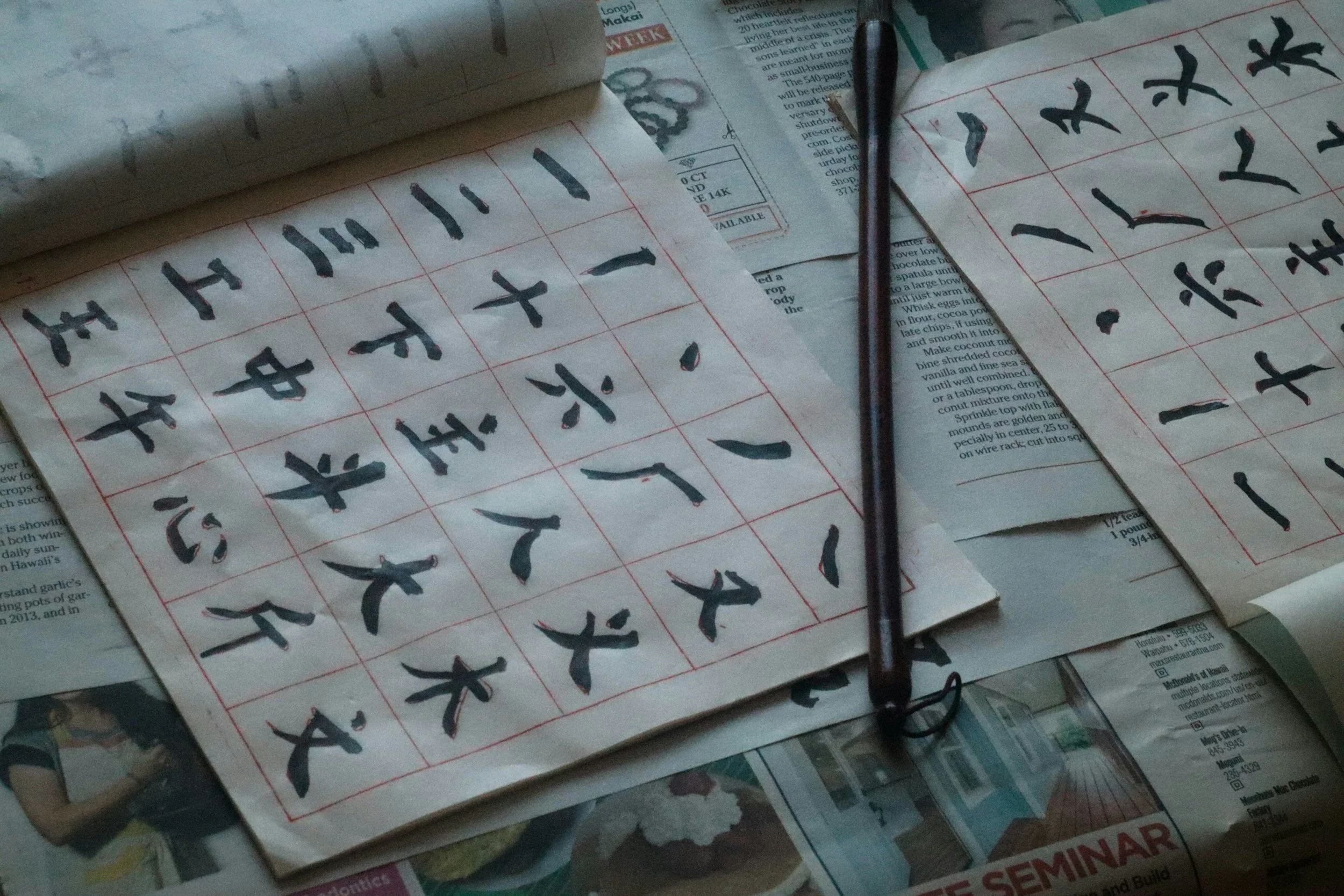
Stroke order ensures your writing flows naturally, balancing the character perfectly.
When beginners first start writing in Mandarin, they usually make the same mistake: they look at a Chinese character and try to "draw" it like a picture.
They might start from the bottom, add a line to the left, draw a box in the middle, and then scribble a dot on top. While the final result might vaguely look like the target word, it usually feels unbalanced, blocky, and takes far too long to write.
To truly read and write Mandarin efficiently, you have to stop drawing characters and start writing them. The secret to making the transition lies in mastering Stroke Order (笔画顺序 - bǐhuà shùnxù).
Why Does Stroke Order Matter?
Chinese characters have been written with calligraphy brushes for thousands of years. The rules of stroke order were developed so that the brush could move across the paper with maximum speed, fluidity, and balance.
Even though you are likely typing on a keyboard or writing with a ballpoint pen today, those ancient rules still apply. Learning stroke order provides three massive benefits:
Muscle Memory: When you write a character in the same order every single time, your hand memorizes the "flow" of the word, making it much easier to recall during an exam.
Speed: Correct stroke order is the fastest way to write a character. Once you master it, your pen will naturally glide to the start of the next stroke.
Reading Handwriting: Native speakers write very quickly, often connecting their strokes together. If you don't know the proper stroke order, reading a native speaker's handwritten note will look like an impossible scribble.
The Golden Rule: Generally, Chinese characters are written from top to bottom, and from left to right.
The Best Free Tool: Learn Chinese Strokes
Telling a student to "memorize the stroke order" is easy, but actually practicing it can be tedious. That is why our instructors at Sishu Mandarin frequently recommend a fantastic, free online tool to our students: LearnChineseStrokes.com.
Created as a companion tool for language learners, this website is beautifully designed to help you slow down and master characters "one stroke at a time."
Here is why we love incorporating it into our study routines:
1. Visual Stroke Animations
Instead of trying to decipher a static diagram in a textbook, Learn Chinese Strokes provides fluid animations for almost 5,000 dictionary entries. You can watch the character being written, adjust the playback speed from 0.25x to 2x, and step forward or backward stroke-by-stroke.
2. Built-in HSK Vocabulary Libraries
The tool is perfectly synced with the HSK (Hanyu Shuiping Kaoshi) curriculum. If you are a beginner, you can pull up the "HSK 1" library and instantly access the 150 essential words you need for the exam, ensuring you are only practicing the most useful characters.
3. Interactive Writing Practice
The site doesn't just show you the animation; it allows you to practice. With the "Try writing it yourself" feature, you can use your mouse or touchscreen to trace the character. If you draw the wrong stroke, the system gently corrects you, forcing you to build the right muscle memory.
4. Custom Worksheet Builder
If you prefer pen and paper, the platform includes a class worksheet builder. You can curate a list of the exact words you are studying that week and export a customized PDF grid to practice your handwriting offline.
Build Your Routine with Sishu Mandarin
Tools like Learn Chinese Strokes are fantastic for independent practice, but they work best when paired with structured, expert guidance.
If you are ready to stop guessing and start building a rock-solid Mandarin foundation, Sishu Mandarin is here to help.
To master the HSK curriculum at your own pace, join our online group classes for just $99/month, which includes live small-size Mandarin classes breaking down the language step-by-step.
Prefer to get real-time feedback on your pronunciation and handwriting? Book a 1-on-1 private lesson with our native-speaking instructors in New York City, Washington D.C., or online.